
By Hasan Murshed, MD
Cancer outcomes are shaped long before a patient reaches a treatment room. They're shaped in the exam room, in the moments when a clinician decides whether a symptom deserves a second look, whether a screening conversation is worth having, or whether "watch and wait" is the right call. Many of the most common cancers we treat are either preventable or highly curable when caught early — but only if we catch them early.
This post brings together ten clinical pearls on early detection, covering the cancers we see most often in practice. Each one highlights a key warning sign or screening point, along with what early diagnosis means for treatment and outcomes. My hope is that colleagues find this useful, share it with their teams, and keep a low threshold for the next step, whether that's a biopsy, a referral, or simply a conversation with a patient.
An infographic accompanies each section below, covering risk factors, symptoms, screening, and treatment at a glance.
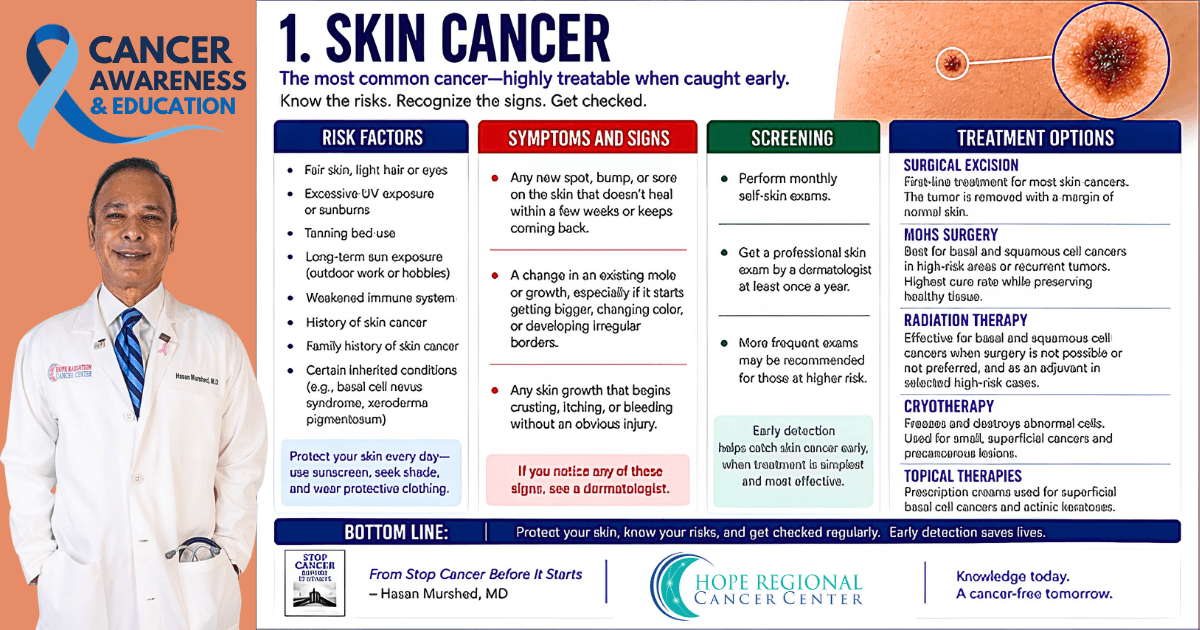
1. Skin Cancer
A skin lesion that doesn't heal deserves a second look.
Any new spot, bump, or sore that doesn't heal within a few weeks, or keeps recurring, warrants prompt evaluation. The same goes for any growth that begins crusting, itching, or bleeding without an obvious injury. Early diagnosis of skin cancer usually means less extensive treatment and excellent cure rates.
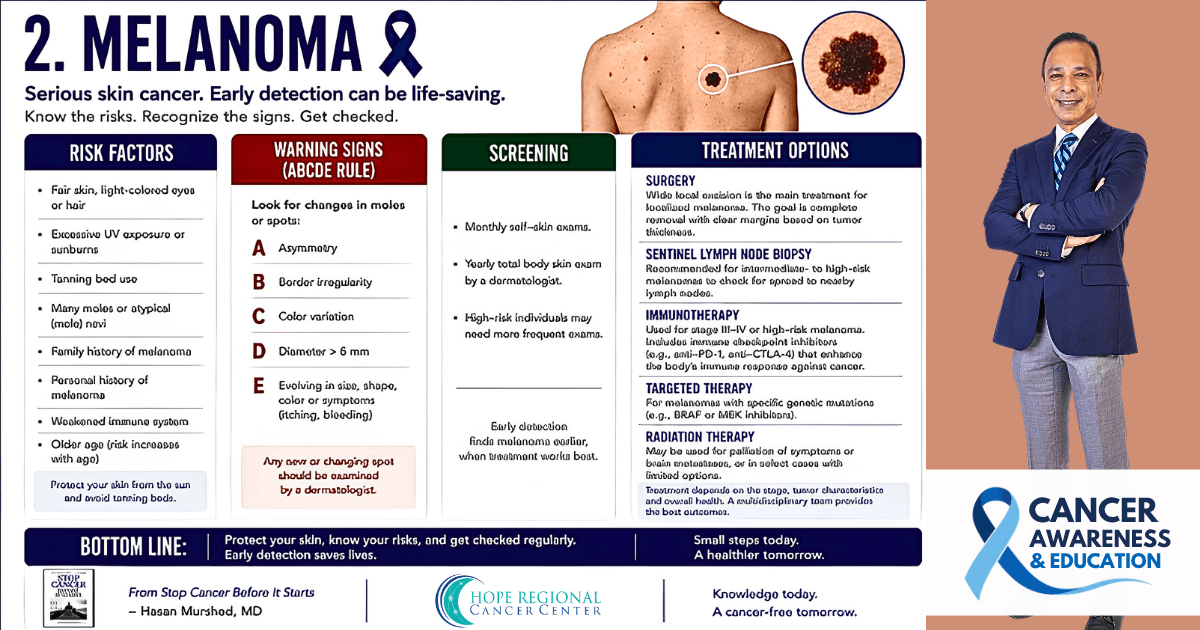
2. Melanoma
The most important melanoma diagnosis is the first one, before it spreads.
Keep the ABCDE rule (Asymmetry, Border irregularity, Color variation, Diameter, Evolving) front of mind, and maintain a low threshold for biopsy or dermatology referral. Early-stage melanoma is usually cured with surgery alone, whereas advanced disease often requires immunotherapy or targeted therapy.
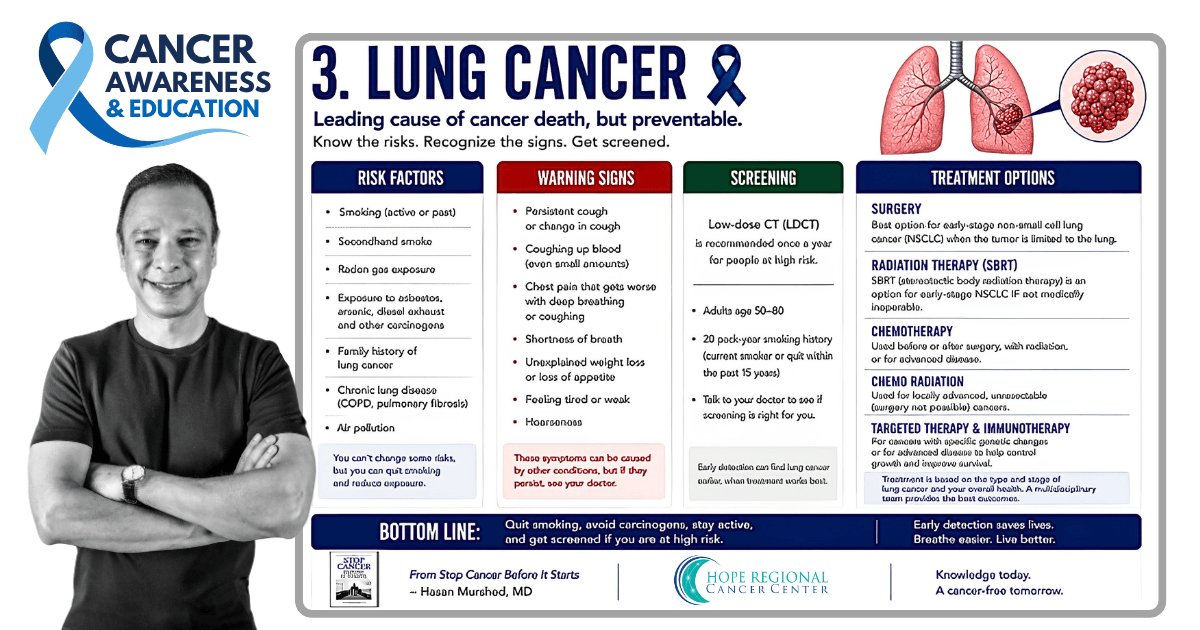
3. Lung Cancer
Every eligible current or former smoker deserves a conversation about lung cancer screening.
Identify patients ages 50–80 with a 20-pack-year or greater smoking history, whether they currently smoke or quit at any point, for annual low-dose CT (LDCT) screening. Pair this with aggressive smoking cessation counseling. Early-stage non-small cell lung cancer (NSCLC) is often curable with surgery, or with SBRT in medically inoperable patients, while unresectable locally advanced disease is commonly treated with chemoradiation followed by immunotherapy.

4. Breast Cancer
The best breast cancer treatment begins with screening, not chemotherapy.
Recommend screening mammography beginning at age 40 for average-risk women, and know your patient's breast density and individual risk factors. Early-stage breast cancer is often treated with breast-conserving surgery and selected adjuvant therapy, resulting in excellent outcomes.
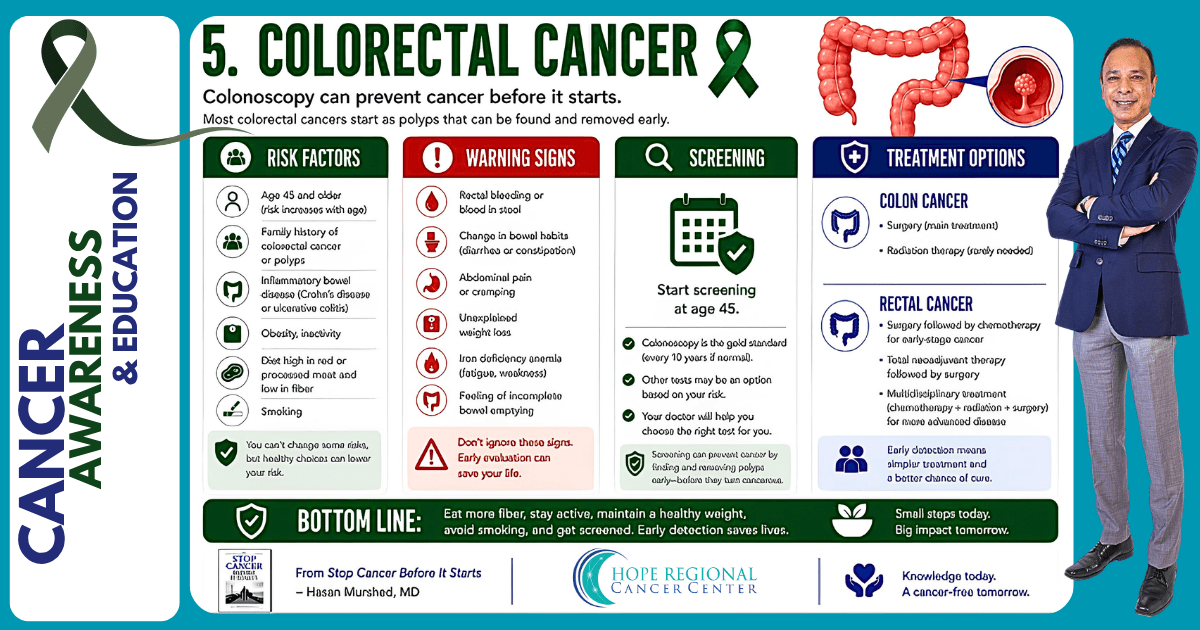
5. Colorectal Cancer
Colonoscopy is one of the few screening tests that can prevent cancer, not just detect it.
Recommend colorectal cancer screening beginning at age 45 for average-risk adults. Colonoscopy can detect and remove precancerous polyps before they ever become cancer. When cancer is found at an early stage, it's far more likely to be cured with less intensive treatment.
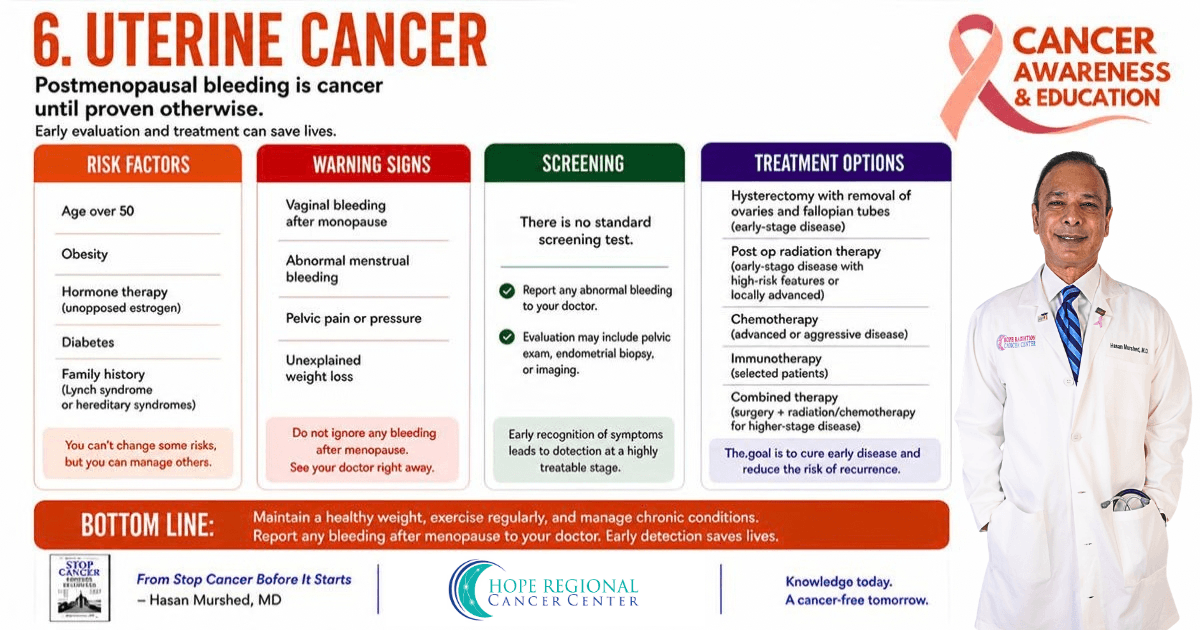
6. Uterine (Endometrial) Cancer
Postmenopausal bleeding is endometrial cancer until proven otherwise.
There is no routine screening test for uterine cancer, which makes symptom awareness critical. Prompt evaluation of postmenopausal bleeding can detect endometrial cancer at an early, highly curable stage, when surgery alone is often sufficient treatment.
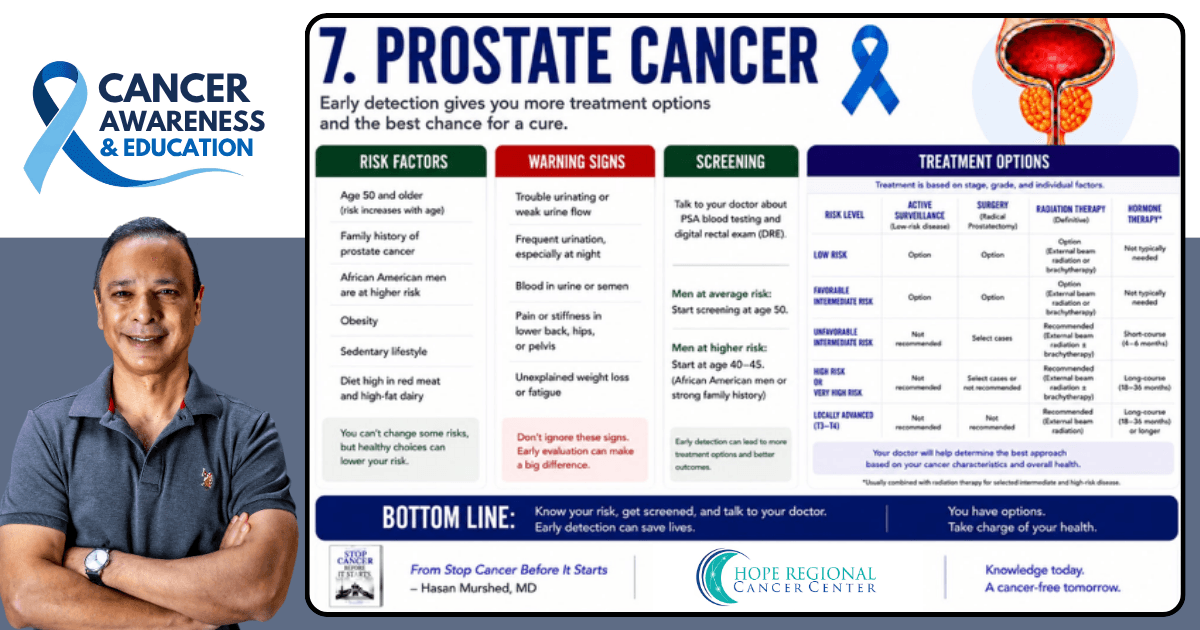
7. Prostate Cancer
Not every prostate cancer needs immediate treatment, but every man should have an informed discussion about whether PSA screening is right for him.
For patients at increased risk, including those of Black ancestry, those with germline mutations, or a strong family history, consider initiating PSA screening at age 40–45. Interpret PSA results in the context of trends over time, digital rectal exam findings, family history, and individual risk factors. Early detection provides more treatment options, while allowing many men with low-risk disease to pursue active surveillance instead of immediate intervention.
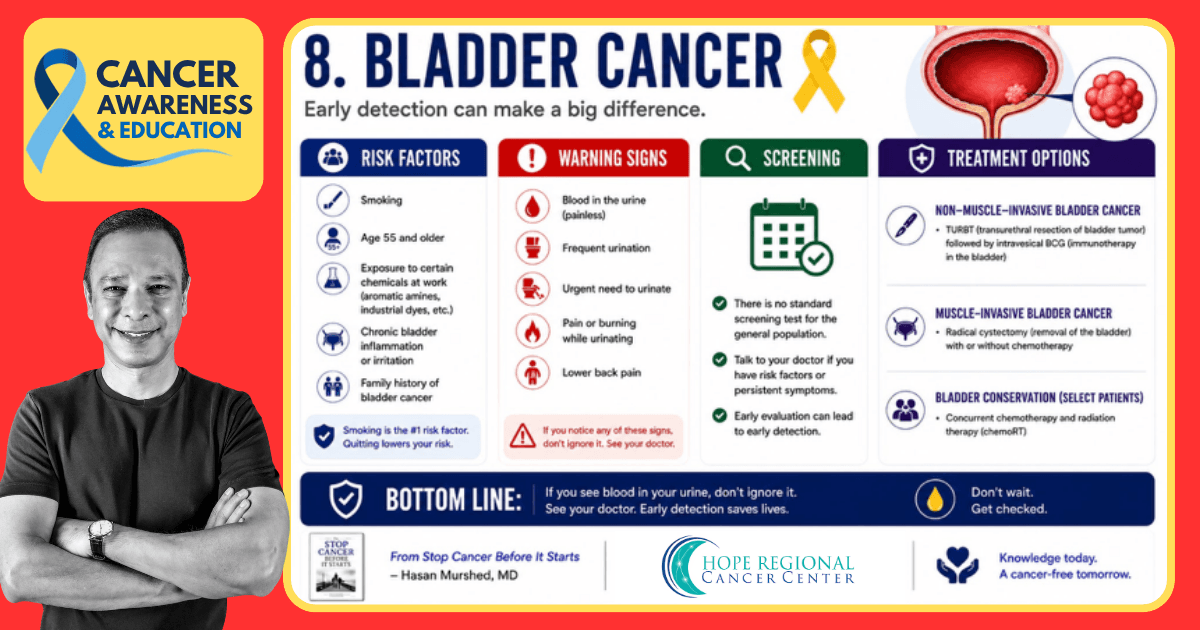
8. Bladder Cancer
Painless hematuria is bladder cancer until proven otherwise.
Any patient presenting with painless gross hematuria warrants prompt urologic evaluation, including cystoscopy. Early-stage bladder cancer is often cured with transurethral resection (TURBT) and intravesical BCG therapy, whereas muscle-invasive disease typically requires multimodality treatment.
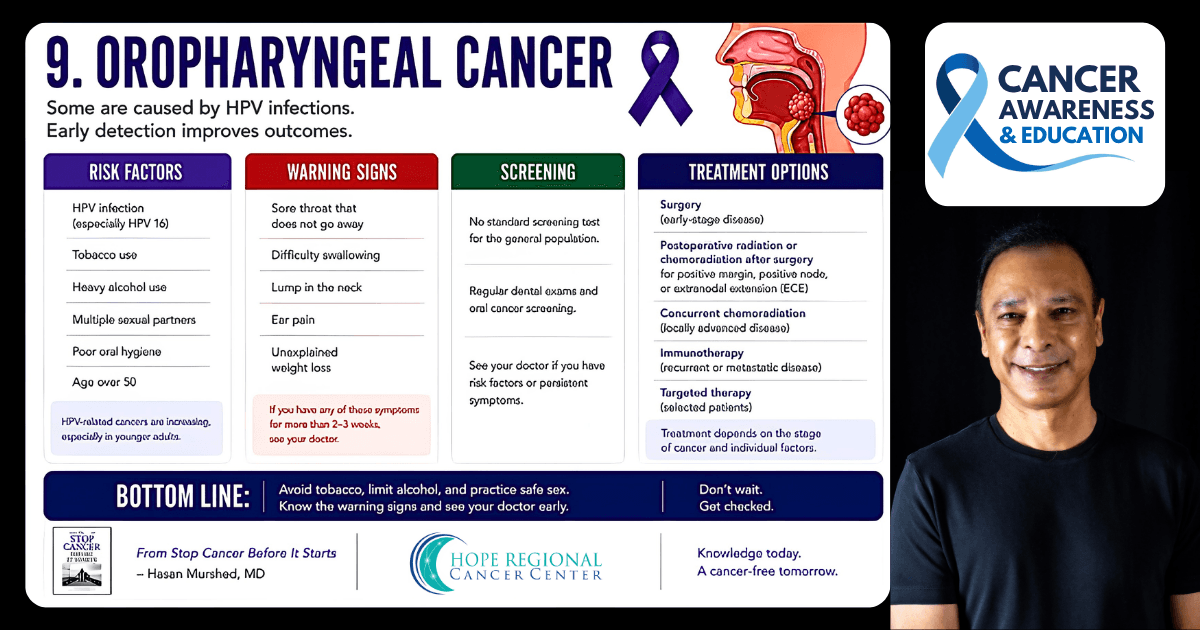
9.
Throat (Oropharyngeal) Cancer
A sore throat lasting more than two weeks deserves more than another course of antibiotics.
Persistent sore throat, dysphagia, hoarseness, or a painless neck mass should prompt evaluation for oropharyngeal cancer. Encouraging HPV vaccination remains one of the most effective prevention tools available. Early diagnosis improves outcomes and may reduce the need for more intensive treatment down the line.
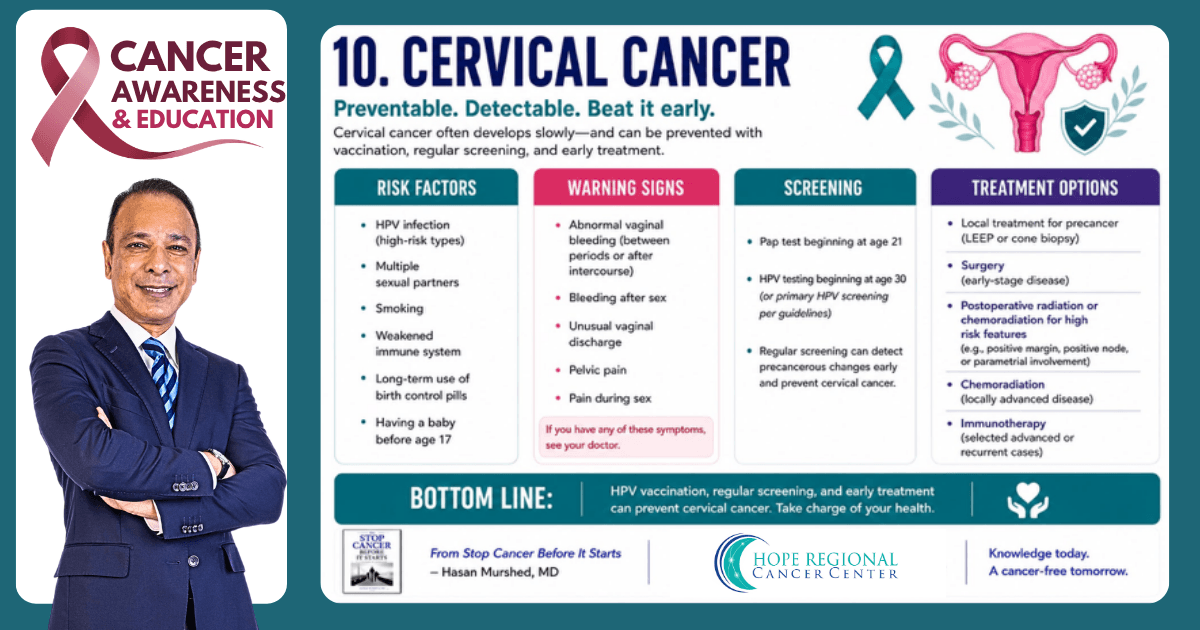
10. Cervical Cancer
Cervical cancer can often be prevented before it ever begins.
Promote HPV vaccination and help patients stay up to date with cervical cancer screening. Detecting and treating precancerous lesions prevents invasive cancer and significantly reduces cervical cancer mortality.
The Common Thread
Across all ten of these cancers, the pattern is the same: a brief window where a symptom, a screening test, or a simple conversation can change the entire trajectory of a patient's disease. Early detection doesn't just mean better survival statistics, it often means less invasive treatment, fewer side effects, and a faster return to normal life.
I hope this series serves as a quick-reference reminder for busy clinicians and their teams. Knowledge today really can mean fewer cancers tomorrow.
Dr. Hasan Murshed is a radiation oncologist at Hope Regional Cancer Center in Panama City, Florida and author of Fundamentals of Radiation Oncology; Physical, Biological, and Clinical Aspects (4th Edition) and his new book, coming soon; Stopping Cancer Before It Starts.